Nothing serious, just a fun iPad app for a Sunday.
The many filter apps that process photos to create various effects have become ubiquitous. Old film effects, sepia, Polaroid, old time movie, painting, etc., etc., etc. There is a filter for everything. Some of these have often been accused of existing solely to make bad photos somehow cool. An accusation that probably has more than a bit of truth behind it.
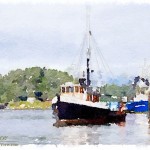
The fishing boat Roedda departs the packing plant dock in PetersburgEvery now and then a filter app seems to rise just a bit above. Waterlogue is a filter that creates a watercolor style painting from a photograph. The app is available for iOS devices and can run both on the pads and phones.
The painting process uses an edge detection filter first, extracting the structure of the photos. Each of the various presets has dramatically different settings for this edge detection. The app then paints in the selected colors to fill in the painting. The process is animated, watching this can be rather fun.
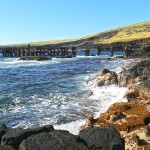
A picture postcard perfect setting… Brilliant blue water, waves crashing on black rock, palm trees overhead, the old pier jutting out from shore. Whittington Park is a beautiful stop along the Mamalahoa Highway as you round the south end of the island.
The old pier at Honu‘apo slowly succumbs to the battering surfLike Mahukona at the north end of the island, this is an old sugar port. Here the small inter-island steamships loaded cargoes of Ka‘u cattle and sugar bound for Honolulu and shipment to markets across the Pacific. Bulky cargoes are best transported by water, thus these busy little ports were once found across the islands, today only a few ruins remain.
Honu‘apo Pier in 1908Known as Honu‘apo, or turtle cove, the port served area ranchers and plantations until the middle of the twentieth century, when better roads and trucks allowed shipments to the port in Hilo. Numerous ruins remain, seen in the wave battered pier, scattered foundations, and the ruins of a sugar mill across the highway. The pier has been destroyed and rebuilt several times, pounded by winter storms, once blown up by the army to prevent use during a feared Japanese invasion.
A large pond and wetlands sit alongside the mown lawn at the center of the park. Once maintained as a fishpond by ancient Hawaiians it is now a rich marsh. The park encompasses over half a mile of shoreline and over two hundred acres of land. There is plenty to explore along the shore north of the main park. Numerous archeological sites scattered across the low coastal plain testify to the centuries of use, from a large pre-contact village, to the plantation operations of the 19th and 20th centuries.
It is a pretty park with decent facilities. Camping is available here with a permit that can be purchased online. Stop by and enjoy the scenery and have lunch. Much of the time this beautiful park sits empty, the isolation of this coastline exemplified.
Tomorrow morning, March 26th, will see a brilliant Venus paired with a crescent Moon. Look for the pair to rise about 03:48HST to be 32° above the horizon at sunrise. An 21% illuminated Moon will be a nice match for Venus shining brilliantly at -4.3 magnitude. Separation will be about 9°.
The following morning, March 27th, will see the pair even closer with the Moon 6° below Venus. Observant sky-watchers will note Mercury another 18° closer to the eastern horizon and the rising Sun.
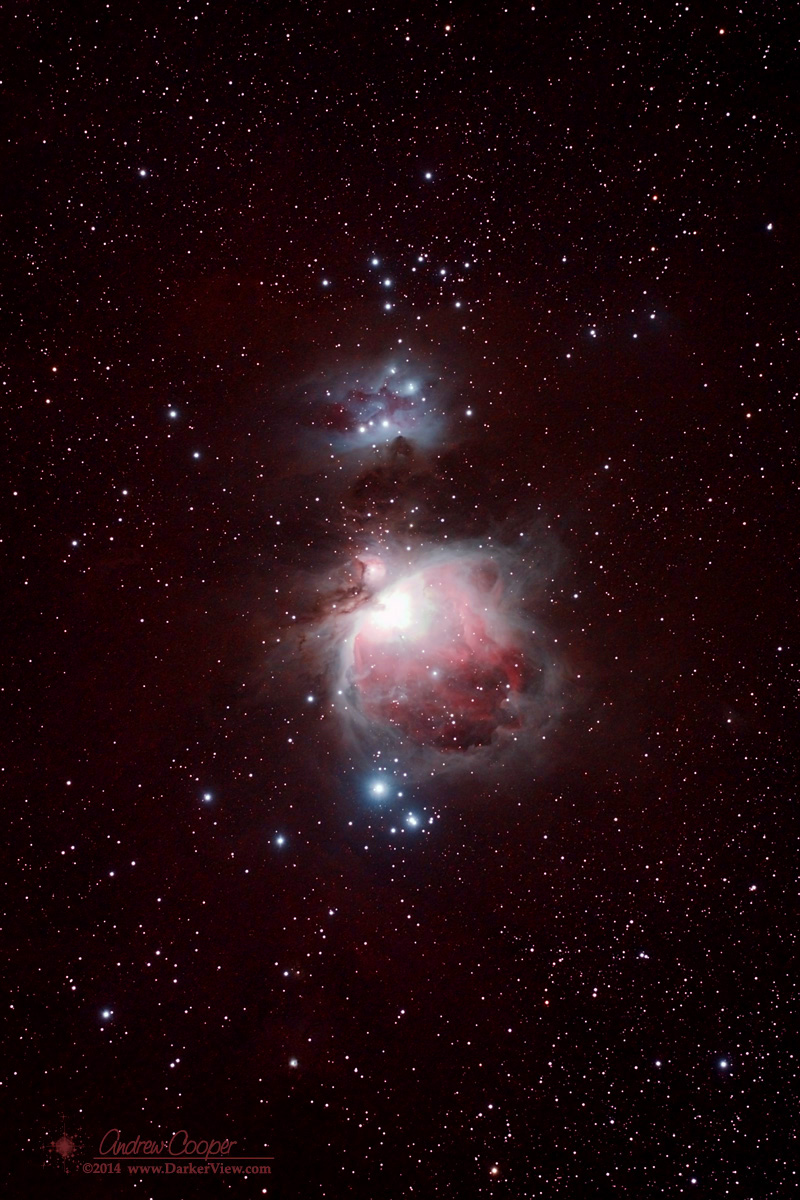
The Great Nebula of Orion is a beautiful object, the brightest nebulae in the sky. It is also quite easy to photograph, making it somewhat of a standard target. I, like many astrophotographers, use the nebula as something of calibration target to check new equipment and processes.
This shot was taken with a Canon 6D and a TV-76mm telescope, a combination I want to work with this summer. I also changed up my processing flow a bit, re-ordering the steps, to achieve better calibration. The result is a more neutral color tone in the original, I can then saturate the image to taste for display or printing. Th original might be a bit closer to true color. Of course, “true color” is a bit of an illusion in astrophotography, where everything is relative.
M42, The Orion Nebula, Canon 6D and TV-76mm, 16x240s+10x60s+10x15s @ISO6400
The vernal or spring equinox occurs today at 06:57HST. Today there will be little difference between the length of the night when counted against the number of daylight hours. This is the first day of spring as marked by many cultures in the northern hemisphere.