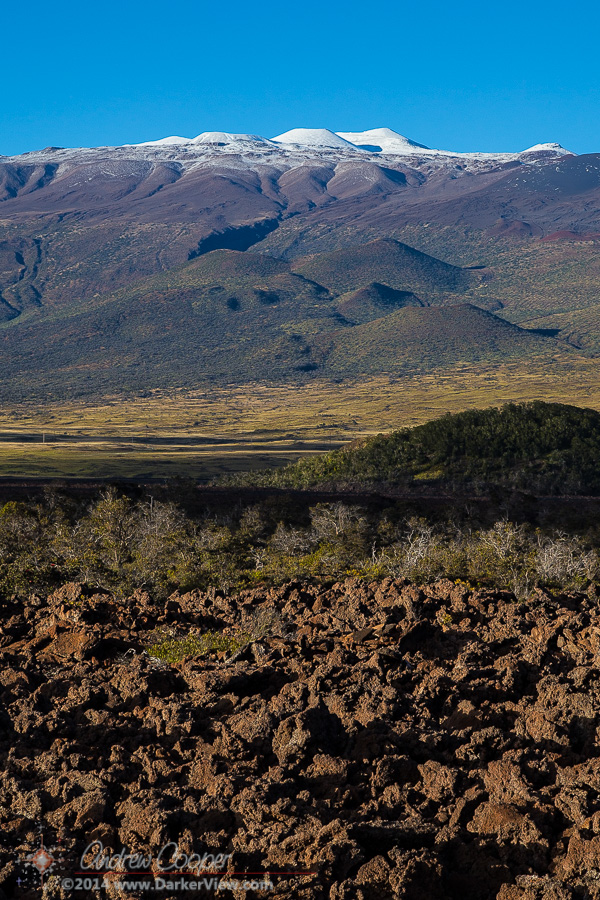
Mauna Kea White
When you want to see the stars, find someplace dark

Not just a little ice. A world where everything is coated with multiple inches of ice. The freezing fog left behind impressive results.


Not a great deal of snow, maybe an inch or two rearranged by the winds. More snow is expected over the coming few days before this storm is over. Where to find the heaviest snow on the mountain? Puʻu Poliʻahu of course, just look at the images below.
This is the first winter storm that our new weather mast camera is operating, since I bolted it in place a couple months ago. It is great fun to have a full pan-tilt-zoom camera available during weather events like this.


The first real product of Saturday’s imaging session on Mauna Kea. Processing comet images is a challenge (actually I am using far less correct language while I work on it). The problem is that comets move rapidly against the star field. This creates all sorts of issues when attempting to assemble a final image.
The single frame shown here is he product of 28 light frames and thirty calibration frames. The light frames used in this image were each 4 minutes long, accounting for nearly two hours of exposure total. There were a few more, but a few had to be discarded due to wind-shake of the telescope during the exposure.
The image below is processed to align on the comet as it moves against the background stars. During the two hours of exposures the comet moved appreciably. The stars are somewhat suppressed by using a sigma reject combine, but they are still there. Processing like this allows the details in the tail to be seen.

With a set of images running for two hours taken without interruption other things can be done. One possibility is that these images can be animated, leading to another interesting product… Up next!
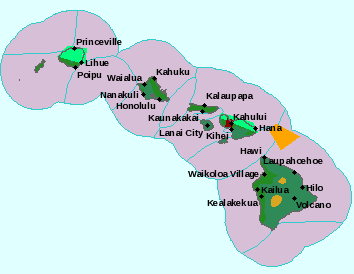
It will be interesting to see just how much snow we do get. The Mauna Kea Weather Center is predicting a possible six inches. I do not plan on being on the summit until Friday. A white Christmas?

It is currently snowing on the summit. Not just a dusting this time, but a real blanket of white on the mountain. Poliʻahu has returned to the summit. The forecast is calling for up to three inches of white before tomorrow morning.
We just got word that the Keck summit crew is abandoning the summit. They are leaving before the conditions get worse.
A photo from a UKIRT webcam is below. I would post one from our Keck cameras, but the camera windows are covered with blown snow and ice. I have a new all-weather webcam, a full pan-tilt-zoom unit to install, but it is still sitting in a box at the summit. Personally I am not planning being up until Wednesday, I wonder if the snow will still be there, fresh snow on the mountain is always pretty.

When most folks work late at the office it is a boring evening at a desk staring at a computer. I may have stared at a computer a bit, but it was hardly a boring evening.
Waiting for darkness had it’s advantages, an opportunity to do a little photography. In addition to the usual tool bag and lunch I took my camera gear with me.
With Sniffen on the roof while I watched the frames on the computer, I called the corrections up to him on the radio. It is tricky work to focus a fast lens, made worse by the need to do it remotely. We had to wait for each 30 second exposure, painfully slow. I hesitated to ask Sniffen to sit much longer out in the cold, but he was game and ready to assist. His tiny adjustments were deftly made, I watched as the lens moved through focus.
After leaving Keck I took my time wandering down the mountain. I stopped at IRTF for a set of panorama shots. One of the first things I noted was the lack of airglow. Last time I shot from the summit the airglow was intense. Despite using the same camera and lens, with the same settings, the bright red glow was missing. Only a pale green near the horizon to be seen in the shots.
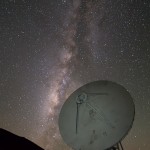
On a whim, I drove out to the VLBA antenna for a set of shots. This radio telescope was something different than the usual telescope shots I take. I walked around the dish until I could position the summer Milky Way beside the antenna. As the VLBA is a radio telescope there was no issue in using a little light from my flashlight to paint the dish and illuminate it for the photo.
I arrived home just before midnight, tired from a full day on the summit. The photos will wait for another day for processing.
