Shooting Timelapse

Shooting Timelapse
The G11 clamped to a piece of construction gear to shoot a time lapse of sunrise atop Mauna Kea
A few projects have been completed, but more are in work. I continue to accumulate material for new video projects.

Sometimes I specifically plan to shoot a scene. Other times I simply take advantage of what opportunities present as go about the usual business of life. Driving home the light and clouds catch my attention. I stop along the road, setting up the camera and shooting 20 minutes of time lapse. This will become ten seconds of video, clouds sweeping past the summit of Mauna Kea in late afternoon light.

I have located several more pieces of music appropriate for soundtracks. It is the music I start with, building the video around the soundtrack. With music in hand I can plan, visualizing the finished video, deciding what further scenes I need to go out and shoot.

Keep a camera handy.

The Transit of Venus

We did the Transit of Venus right.

The plan was to stream the transit live from the summit. With access to the Keck facilities we had internet, a comfortable break room, and an excellent vantage point from which to view the entire transit. It sounded so easy at first, just put a camera on a telescope and connect it to the computer for the duration. Easy, in concept. The reality? Not so much.

Venus Transit Second Contact
Transit of Venus 2012, second contact at 12:27pm

It was an incredible amount of work. I had spent several days during the preceding weeks preparing the gear for transit. I admit some of that was fun, an excuse to get the gear out in the day and look at the Sun, even photograph Venus quite near the Sun.

The webcast team consisted of three people, Larry O’Hanlon, the Keck PIO, Mark Senft, a volunteer from our astronomy club, and myself. Larry and I met a HQ to begin our drive up the mountain at 8am.

At Hale Pohaku we picked up Mark and enjoyed breakfast. Here we found a massive buildup in progress, a gathering of troops… Visitor center staff, Hawai’i County police and fire, and the Mauna Kea Rangers, all present in force. Stephanie Nagata, the director of the Office of Mauna Kea Management helped man the roadblock. Stewart Hunter, the head of Mauna Kea Support Services with her in an orange vest. Their preparations looked to be necessary, three hours prior to first contact the crowds of transit tourists were already growing.

Continue reading “The Transit of Venus”

Observing the Aureole of Venus

Black drop effect? Bah! I observed a beautiful aureole effect in the minutes leading up to second contact.

The famous black drop effect is seen when atmospheric distortion of the image is quite bad. The effect plagued the early observers attempting to do transit timings. The effect is not seen when the atmosphere allows sharp views of the transit.

Instead, if the seeing is truly good, it is possible to see something far more rare, the aureole of Venus. This is a faint ring of light that has been refracted and scattered through the atmosphere of the planet.

I had not expected to see this, the appearance of the arc of light a complete surprise. But there it was… Very thin, quite faint, a sharp arc of light completing the disk of Venus. The view was steady, with nearly perfect seeing the arc was visible continuously.

Analyzing the observation afterwards I realize it was two elements that allowed me to see the aureole, the excellent seeing offered by the summit of Mauna Kea and good equipment. I was looking through my TeleVue 76mm telescope, using an 8mm Radian eyepiece and a Baader solar film filter. Very good equipment indeed, the optical performance of the system was not going to be a problem.

In the confusion and effort of running the Keck Observatory web stream, I was so glad I managed to free up the few minutes necessary to properly observe second contact. The sight was one of the most beautiful and sublime of any I have witnessed through an eyepiece in my many years of looking through a telescope.

I have been through my photos, nothing captured the faint arc of the aureole, no matter how I stretch the exposure. The best I can do is to record a few drawings in my observing notebook, a poor substitute for the beauty of the real thing…

Transit Of Venus 2012 Aureole
The aureole visible on Venus during 2nd contact, 2012 transit

The Purple Refractor

Apparently the purple refractor was quite the hit on yesterday’s webcast. Not only did it provide beautiful imagery of the Transit of Venus for everyone to enjoy, but caught the attention of many viewers. There we many comments… “Where can I get one?”, “How much?”, and my favorite… “…paint Keck purple!”

Violet Haze really is a great telescope, an entirely hand-made instrument, with the exception of the focuser. The lens set is a full apochromatic triplet by Roger Ceragioli, a true expert in refractor design and manufacture. The purple optical tube is my own machine work. The result is a truly unique telescope that is a joy to use.

Imaging Venus in the Daytime
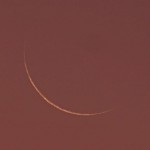
Imaging Venus in the daytime a mere 12°44' from the Sun.

Postcard from the Universe – Venus Transit

Transit is over, an exhausting and exhilarating day! I am headed to bed, but still totally jazzed with the experience. Keeping the webcast going for seven hours was a huge effort. Given the comments from our viewers it was worth it. I will have to more fully write up the experience for a later post.

The best visual for the day was the few minutes just before second contact… A beautiful, razor thin arc of light coming through the Venusian atmosphere, connecting the two horns of the occluded Sun. It was delicate and sublime, one of the most memorable sights I have ever seen through a telescope. With the excellent seeing of Mauna Kea, and the wonderful optics of my TV-76 telescope, the sight was clear and steady. I have yet to find a photograph that captures what I saw through the eyepiece.

I will post a quickly processed version of one of the frames from the second camera…

Venus Transit Second Contact
Transit of Venus 2012, second contact at 12:27pm

Transit of Venus is Today

Transit of Venus
The June 2004 Transit of Venus, image credit Jan Herold
The gear is tested, packed and ready. All of the arrangements have been made. It is time for the 2012 Transit of Venus!

We will be webcasting the transit live from the Keck telescopes at the summit of Mauna Kea. Tune in for images of the transit, and a lot of information about the transit. Larry O’Hanlon and I will be talking about the transit, the science, the history, and just generally enjoying the experience. You are invited to join us. Expect the broadcast to start about 11:45HST, or about 25 minutes before first contact.

Want to see for yourself? There are multiple locations around the island where you will find solar telescopes and volunteer guides to answer your questions about this event. Not on the Big Island? Check you local paper or look up your local astronomy club to find public events. Science museums, colleges, astronomy clubs and other astronomy organizations are organizing public events wherever the transit can be seen.

Location Name External Sun
Ingress Alt

h m s °
Internal Sun
Ingress Alt

h m s °
Greatest Sun
Transit Alt

h m s °
Internal Sun
Egress Alt

h m s °
External Sun
Egress Alt

h m s °
Anchorage, AK 14:06:30 51 14:24:04 51 17:26:53 38 20:30:46 16 20:48:32 14
Honolulu, HI 12:10:07 85 12:27:46 89 15:26:20 49 18:26:38 9 18:44:38 5
Kona, HI 12:10:09 86 12:27:48 87 15:26:16 47 18:26:33 7 18:44:33 3
Los Angeles, CA 15:06:26 58 15:24:02 55 18:25:33 18 — – — –
Phoenix, AZ 15:06:03 54 15:23:40 50 18:25:32 13 — – — –
Portland, OR 15:06:05 57 15:23:40 54 18:25:53 23 — – — –
San Francisco, CA 15:06:29 61 15:24:04 57 18:25:39 22 — – — –
Seattle, WA 15:05:58 56 15:23:32 53 18:25:57 23 — – — –

All times local. The data is taken from Fred Espenak’s NASA Eclipse Website. I extracted the cities that are of most interest to my Hawaiian readers. For the full list of US cities you can go here.

Please exercise caution when viewing the Sun! Use appropriate eye protection or indirect observing techniques to project an image of the Sun. The link at the start of this paragraph leads to a great discussion on viewing the Sun safely. As always the single best source on the web (or anywhere) for eclipse and transit information is Fred Espenak’s eclipse website at NASA. Stop by whenever you have a question on upcoming events as well as viewing and photography tips.

Venus Transit Thoughts

Tomorrow we will witness an astronomical spectacle that will not be seen again by anyone currently alive. The gear has been double checked, packed and loaded. Telescopes, cameras and computers are ready, with the exception of a few camera batteries awaiting their turn in the charger.

Imaging Venus in the Daytime
Testing gear for the Transit of Venus.
It is an odd sense of anticipation I feel. I have had the transit marked in my mental calendar for eight years, since I was unable to see the first transit of this pair. I have had a blog post written and scheduled for June 5th, 2012 ever since I moved to the island five years ago. Every time I logged into the administrator page, there it was, at the top of the list, ever so slowly growing closer. That day is here.

After a great deal of work, the gear is ready, a big source of apprehension has been dealt with. There is some doubt about the weather, with both high winds and possible clouds an issue. But there is nothing I can do about that. I can go into tomorrow and have fun with this event. It will be a very long and tiring day at the summit. Whatever happens, it will be a day for memories.

There is a new blog post entered now, for August 17th, 2017, another five years from now. On that day a total solar eclipse will sweep across the Pacific Northwest. We amateur astronomers schedule our lives a bit further ahead than most. I plan to be there.