Hapu’u
When you want to see the stars, find someplace dark

Exploring the islands

Most people think that lava flows simply ooze forward and cool in place. But there is more going on than this simple version. Yes, flows ooze forward, but much of the mass of a lava flow arrives later, the flow can inflate to many times the volume as more lava arrives and lifts the crust from underneath.
Well? We have survived Hurricane Week, two hurricanes brushing past the island. Other than a bit of rain and shattered schedules we are just fine. Madeline caused some power outages and dumped a good deal of rain on the windward side. Lester turned north and did not impact the island to any significant degree other than high surf.
Here in Waikoloa we got some wind and no rain from Madeline, and a touch of rain from the water vapor left behind by Lester. Mostly it has just been muggy and hot here on the leeward side.

Hurricane Madeline has come and gone. Other than some flooding, a few power outages, and minor damage here and there, Madeline failed to leave much of an impact on the Big Island. Indeed, satellite imagery loops show the storm coming apart as it interacted with the island and the big mauna. At the house there was some wind, no rain, just a very warm and muggy afternoon and night.
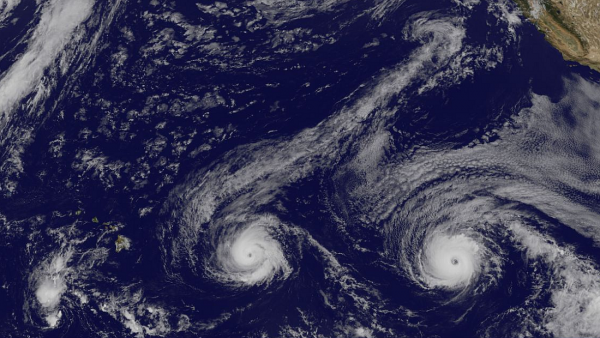
Next up is Hurricane Lester, due to brush the northern side of the island on Saturday…
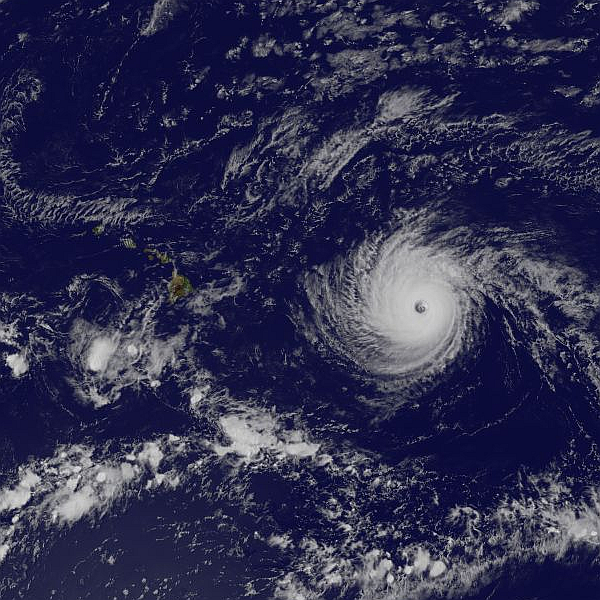
So far is is just windy.
As the first part of the storm pushes ashore on the other side of the island all we are getting is wind. Gusty conditions prevail from Waimea to Waikoloa, about what we would get on a bad day of trade winds. It is enough to bump your car around the road a bit, with gusts around 45mph.
Keck closed up HQ at noon today, sending everyone home. Observing was cancelled last night and is cancelled again tonight. A few support guys went to the summit this morning, checked everything, then left.
While Madeline has been downgraded to a tropical storm, Lester remains a strong hurricane. I am a little more worried about the weather Lester will bring on Saturday.

A pair of hurricanes, both predicted to pass over or near the big island. Looks like a fun week ahead…
I have not had a chance to attend any of the contested case meetings, they are taking place in Hilo on workdays. Following along by reading all of the court documents is almost as good, maybe better. Big Island Video news has also posted quite a few videos of the proceedings where you can watch and get a feel for the tone and process of the hearings.

It is clear that the telescope opponents have a couple basic strategies, neither of which address the issues. First is simply to delay and obstruct. Every decision is appealed and contested, from who is party to the case, to the selection of the hearing officer herself. Attempts to limit the discussion to the issue at hand have been vigorously contested by those who have other agendas.
One observation is that witness lists of telescope opponents are extensive, 39 persons on the Mauna Kea Anaina Hou (Doc-103 and Doc-104) list alone. To be fair, many of the the opponents do only have a few witnesses to call, but the sheer number of participants makes the resulting numbers a bit excessive. Reading through the various lists I fail to see where each witness will bring unique testimony to the case. In contrast the University and other supporters have very brief witness lists with only a handful of witnesses requested. Certain names do stand out… Dr. Sai, a well known sovereignty proponent. UH Chancellor David Lassner is present. Even Governor Ige has been listed, a request that is already subject to extensive legal wrangling.
A common theme in both the hearing room behavior and in the document opponents claim that they have been subject to personal attacks or harassment. Claims are made that they are “under duress” despite the fact that participation in this proceeding is entirely voluntary. Judge Amano has gone out of her way to explain methods by which opponents could participate in the hearings without being full parties in the process and subject to the associated paperwork and attendance burdens.
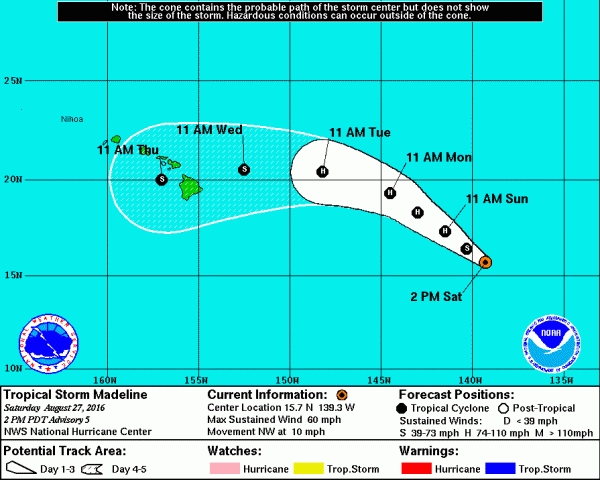
And for the next hurricane to head for our island… I give you Madeline. Not quite a hurricane yet, predicted to strengthen to a full hurricane over the weekend.