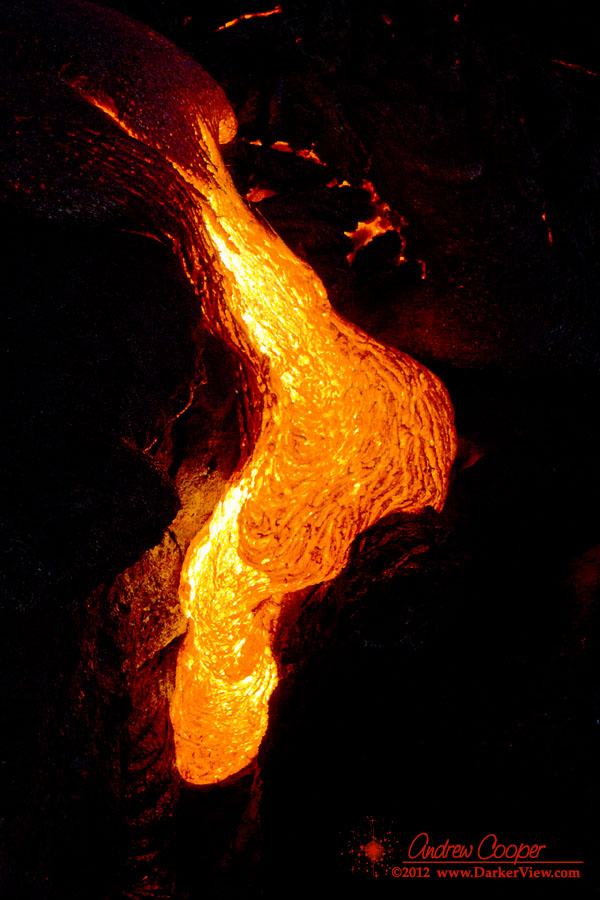
Pāhoehoe
When you want to see the stars, find someplace dark

Exploring the islands

The lava has been entering the sea for over a month now. I have wanted to hike out, but life and other commitments have consistently intervened. With off-island guests, I made the offer to lead a hike out to the flowing lava. My sister-in-law Darcy was the only one that took me up on the offer, the prospect of a 2am wake-up and a two hour trek across rough ground too much for some. We left the others in bed.

Off island guests, always the best excuse to get out and explore the Big Island. this time it is my sister in-law Darcy and her friend Karen. With three horse addicted women, add my wife to that list, it is inevitable that at least one excursion would involve a ride.
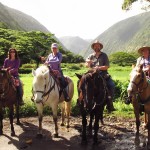
Na’alapa Stables offers a two and a half hour morning or afternoon ride. We chose a morning ride to avoid the usual afternoon clouds common on the Hamakua Coast. The ride is just under $90 per person, and they do offer a kama’aina discount.

Visiting the summit of Mauna Kea is high on many visitor’s to-do list when coming to the island. The summit region is spectacularly beautiful, even after six years of visiting several times a week I still find it so. My habit is to drive, or to ride shotgun in order to enjoy the view. I keep a camera at hand, ready for the inevitable situations where beautiful is transformed to spectacular with a well placed cloud or shaft of sunlight.

Continue reading “Visiting the Summit of Mauna Kea”
The Conservation District Use Permit (CDUP) for the Thirty Meter Telescope has been granted. The Hearing Officer’s report is published and available for reading. And it is interesting reading! Quite oddly I do enjoy reading these legal documents, I have learned much about the summit through the various documents like this.
There are numerous claims that seem quite odd to anyone familiar with the summit, claims that were easily disproved during the investigative process. An “extensive fencing network”? What fences? Anyone who has visited the summit knows that there are no fences around the observatories at the summit. There are some small enclosures necessary to keep people safe around storage tanks and such. Well below the summit the VLBA antenna is enclosed for safety reasons, as is an electrical substation at Hale Pohaku.
49. Petitioners contend that a purported “subdivision” of land among the various existing observatories is evidenced by an “extensive fencing network.” Exhibit A-202 at 22. As was plain during the site visit, there is no “fencing network,” much less an “extensive” one, in the summit region of Mauna Kea.
Claims that the TMT would negatively impact the waters of Lake Waiau? The TMT is not located anywhere near the lake’s watershed. The petitioners engaged in legal mudslinging, throwing as many claims as possible at the case to see what would stick, a legal tactic I dislike immensely. Making such unfounded claims merely serves to discredit the petitioners, distracting the conversation away from the real issues involved in sharing the summit region.
466. Considering all of the evidence, including but not limited to the testimonies of Drs. Liu and Kauanui, and giving such evidence due weight, Petitioners have not offered reliable, probative, substantial, or credible evidence, scientific or otherwise, to suggest that the Project will be harmful to the health, safety, and welfare of native Hawaiians or anyone else.
There are reasonable cultural objections to the use of the mountain for astronomy. These are what must be addressed in this process. Can use of the summit be shared among the various parties? The report clearly comes to the conclusion that we can share the summit and that the presence of the new telescope can be minimized through proper measures.
101. Petitioners did not offer reliable, probative, substantial, and credible evidence, whether from expert or lay witnesses, that would support the conclusion that the TMT Project would cause substantial adverse impact to plants, aquatic life and wildlife, cultural, historic, and archaeological sites, minerals, recreational sites, geologic sites, scenic areas, ecologically significant areas, or watersheds.
There is a list of conditions, which seem quite reasonable… The staff must receive cultural and environmental education on the special nature of the summit of Mauna Kea. We do this at Keck, something I usually find quite interesting. They must use a completely enclosed waste water system. There must be an invasive species plan. Conditions around the construction site must be monitored, including arthropod populations, during construction and for two years afterwards. There is an extensive list that goes on from here…
e. The proposed land use, including buildings, structures, and
facilities, will be compatible with the locality and surrounding areas, appropriate
to the physical conditions and capabilities of the specific parcel or parcels
Will this be the end of the legal process? No. There is an additional hearing for the petitioners to take place before the Hearings Officer so that both sides may review the findings. It is also likely that at least one lawsuit will be filed in reaction to issuance of the CDUP. Unless there is some new legal issue these are unlikely to progress very far. The process so far has been quite exhaustive, any further legal action would simply be a rehashing of what we have already heard.

