
Today the planet Mercury passes through inferior conjunction, passing between the Sun and the Earth. In a week or so the planet will again be visible in the dawn sky, climbing higher each day. Maximum elongation will occur November 17th.
First Earth-Sized, Rocky Exoplanet Found
W. M. Keck Observatory press release…
A team of astronomers has found the first Earth-sized planet outside the solar system that has a rocky composition like that of Earth. This exoplanet, known as Kepler-78b, orbits its star very closely every 8.5 hours, making it much too hot to support life. The results are being published in the journal Nature.

Every 8.5 hours the planet passes in front of its host star, blocking a small fraction of the starlight. These telltale dimmings were picked up by researchers analyzing the Kepler data.
The team led by Dr. Andrew Howard (Institute for Astronomy, University of Hawaii at Manoa) then measured the mass of the planet with the Keck Observatory on Mauna Kea, in Hawaii. Using the ten-meter Keck I telescope fitted with the HIRES instrument, the team employed the radial velocity method to measure how much an orbiting planet causes its star to wobble, to determine the planet’s mass. This is another excellent example of the synergy between the Kepler survey, which has identified more than 3,000 potential exoplanet candidates, and Keck Observatory, which plays a leading role in conducting precise Doppler measurements of the exoplanet candidates.
Zebra Moray
One of the less common morays. How common? I had to dive Hawaiian reefs for seven years to get a good picture of this fellow. Consider I get a decent shot of a whitemouth moray about every other dive.

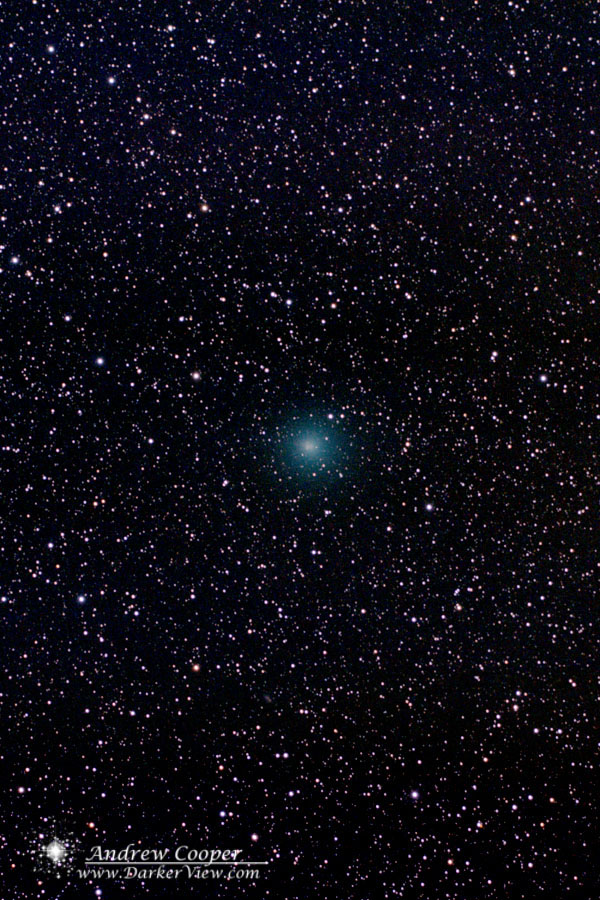
Postcard from the Universe – 144P Kushida
Continuing with the cometary theme, another favorite comet photograph from the past…
ISON Webcast
We put it together in very short notice. Fortunately a webcast is pretty easy to put together.
Keck is hosting a sizable team of folks who are here to observe comet ISON. Astronomers from several institutions are participating in the NASA Comet ISON Observing Campaign. They have a total of 6½ nights, but only the last few hours of each night as the comet rises in the dawn. Comet C/2012 S1 ISON is starting to encounter significant publicity, we may as well take advantage of this.
It was a lot of fun. I particularly like the spot (41:00) where I made the mistake of saying spectra were not very pretty to look at in a room full of spectroscopists. These folks love spectra and quickly corrected me, leading to a nice discussion on why spectra are so valuable to astronomy, often more valuable than photos.
The video is embedded below. A lot of good information about comet ISON, indeed about comets in general. Nothing like having a room full of comet experts…
Just Another Kohala Sunset

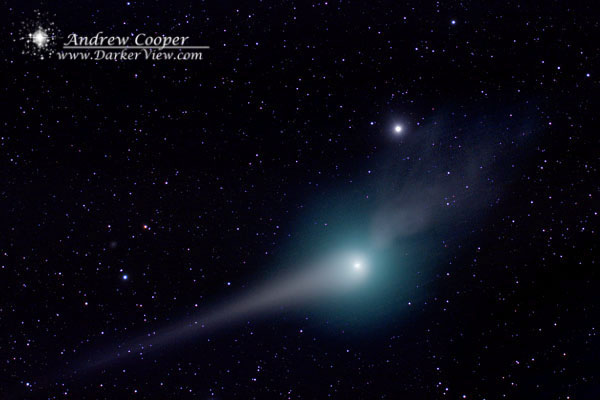
Waiting for ISON
I will probably make my first attempt to photograph C/2012 S1 ISON this coming weekend. A couple reasons for waiting… The bright Moon will have moved out of the morning sky by then. The comet, currently around magnitude ten, is brightening rapidly.
On the other hand the comet is plunging towards the Sun, rising later each day. Wait much longer and the photographic opportunity will slip away, at least until after Thanksgiving, when the comet will again appear after perihelion.
In the meantime, one of my favorite comet photos from years past…
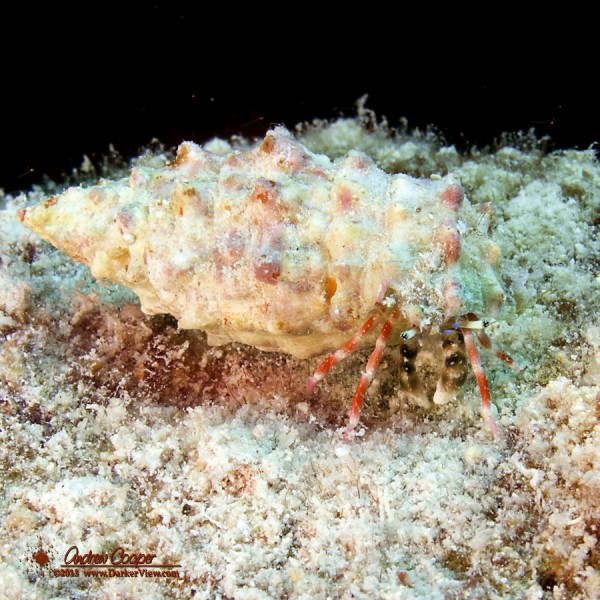
Postcard from the Reef – Laurent’s Hermit Crab
Keck 1
Supposedly twins, each of our two telescopes has its own peculiar personality. Anyone who works on the crew can tell the telescopes apart at a glance. I do not need the caption to know this is Keck 1. Each telescope has a unique configuration, a unique set of instruments, plus many little differences that take time to appreciate and come to love…

Caltech Scientists Detects First Progenitor of Type 1b Supernova
W. M. Keck Observatory press release…
Powerful new survey telescopes led by the California Institute of Technology (Caltech) are being combined with the W. M. Keck Observatory to provide insight into rare, exotic cosmic explosions. Caltech’s intermediate Palomar Transient Factory (iPTF) recently described the first direct detection of the progenitor of a rare type of supernova in a nearby galaxy. The findings were published n the September 20 issue of Astrophysical Journal Letters [http://dx.doi.org/10.1088/2041-8205/775/1/L7].
The paper describes the detection of a Type Ib supernova, a rare explosion in which the progenitor star lacks an outer layer of hydrogen, the most abundant element in the universe. It has proven difficult to pin down which kinds of stars give rise to Type Ib supernovae. One of the most promising ideas, according to graduate student and lead author Yi Cao, is they originate from Wolf-Rayet stars. These objects are 10 times more massive and thousands of times brighter than the Sun and have lost their hydrogen envelope by means of very strong stellar winds. Until recently, no solid evidence existed to support this theory. Cao and colleagues believe that the young supernova they discovered, iPTF13bvn, occurred at a location formerly occupied by a likely Wolf-Rayet star.
Supernova iPTF13bvn was spotted on June 16, less than a day after the onset of its explosion. With the aid of the world-leading adaptive optics system installed on the Keck II telescope, one of Keck Observatory’s two 10-meter telescopes in Hawaii, the team obtained a high-resolution image of this supernova to determine its precise position. Then they compared the Keck Observatory image to a series of pictures of the same galaxy (NGC 5806) taken by the Hubble Space Telescope in 2005, and found one starlike source spatially coincident to the supernova. Its intrinsic brightness, color, and size — as well as its mass-loss history, inferred from supernova radio emissions — were characteristic of a Wolf-Rayet star.
“All evidence is consistent with the theoretical expectation that the progenitor of this Type Ib supernova is a Wolf-Rayet star,” said Cao. “Our next step is to check for the disappearance of this progenitor star after the supernova fades away. We expect that it will have been destroyed in the supernova explosion.”
Though Wolf-Rayet progenitors have long been predicted for Type Ib supernova, the new work represents the first time researchers have been able to fill the gap between theory and observation, according to study coauthor and Mansi Kasliwal from the Carnegie Institution for Science. “This is a big step in our understanding of the evolution of massive stars and their relation to supernovae,” she said.
The iPTF builds on the legacy of the Caltech-led Palomar Transient Factory (PTF), designed in 2008 to systematically chart the transient sky by using a robotic observing system mounted on the 48-inch Samuel Oschin Telescope on Palomar Mountain near San Diego, California. This state-of-the-art, robotic telescope scans the sky rapidly over a thousand square degrees each night to search for transients.