Covered with heavy ice but still functioning normally… I do get something right once in a while…

When you want to see the stars, find someplace dark

Covered with heavy ice but still functioning normally… I do get something right once in a while…
Getting to and from the vehicles was done as quickly as possible, running from door to door. Not only were the temperatures as low as anyone could remember, the wind was adding to the issue, blowing at a steady 35mph. The temperatures reached -8°C (17°F) at night and never rose above freezing during the day. The ice is slowly sublimating in the dry air, but there is still too much on the domes for safe observing.
Now if the wind would obey the posted speed limit…

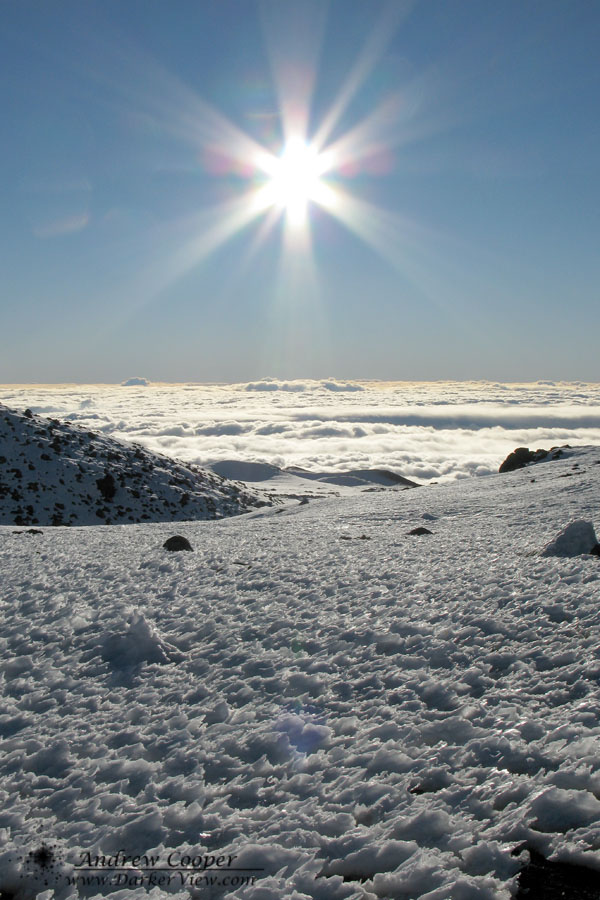

Sorting through thousands of photos, dozens of video clips, and assembling time-lapse from yet more thousands of frames, all to create a mere five minutes of video. It is quite the chore, but also a lot of fun. In a way I relive the voyage, each photo a cue to recall all of the little experiences that make a great trip.
Having another couple photographers along provided a great source of material, it is not all of my photos. Randy and Nancy sent me some of their best, which have been woven in to create a better video. We got lucky on the weather, while it was cloudy and rainy for much of the time, we had a glorious day for visiting the ice at the top of Glacier Bay. We were lucky with wildlife as well… Orca, grizzly, humpback whales bubble netting, mountain goats, eagles, even a set of fresh wolf prints on a beach, all of the big game.
It was fun…
Nordic Quest 2013 from Andrew Cooper on Vimeo.
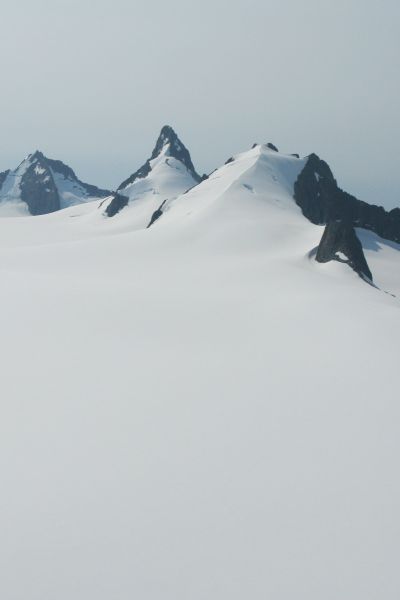
Take a plane or helicopter above the high ridge that rises above the city and you find ice, thousands of cubic kilometers of ice. The Juneau Ice Field is 140km (86miles) north to south and stretches almost 90km (55miles) into Canada. In places it is over 1400m (4600ft) thick, a sheet of ice that remains from a time when the world was colder.
When visiting Juneau it is worth the time to see this place. An air tour from town climbs over the ridge an into another world. Once over the ice the scenery is dramatically stark, ice everywhere, with bare rock and rugged mountain peaks punctuating the white. You would think you are over Antarctica, indeed the Juneau Ice Field has stood in for the south pole in a few movies.
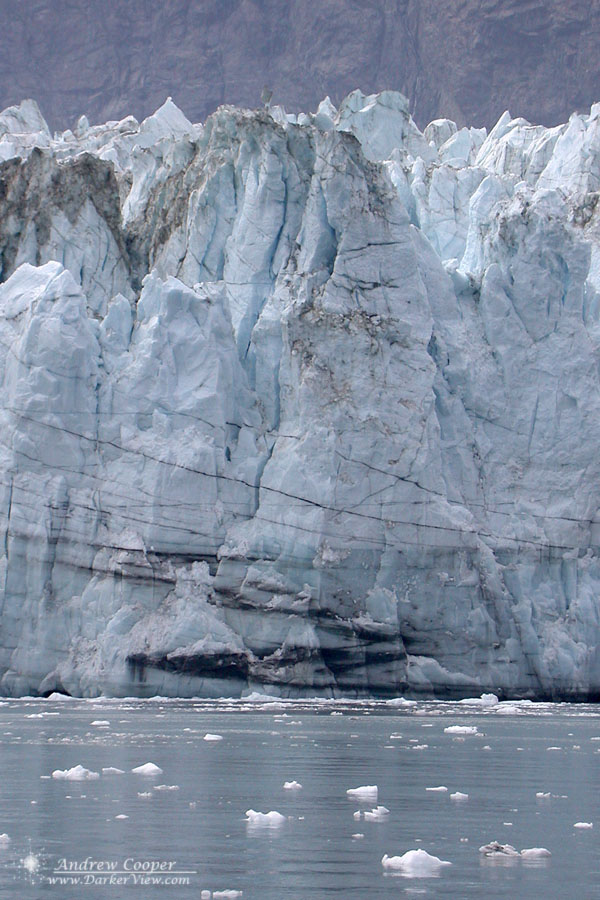
A wall of ice, hundreds of feet high, towering above the water with jagged teeth waiting to crush any hapless vessel below under blocks of ice the size of minivans. The stuff of adventure novels and endless nature documentaries. Such places do exist, where the power of nature is seen raw and in full glory. Witnessing such a spectacle is worth making the effort to get to one of these remote places, where rivers of ice meet the sea.
The show is generally best on a rising tide, as the sea level increases the face of the glacier is lifted and the most unstable pillars of ice come crashing down. Watching from a safe distance gives a chance to see the process in action. No guarantee of a large collapse, no way to predict what will fall on any given day. One can only try to time their visit with high tide to allow the best chance of seeing ice collapses.
When one of the towering seracs does collapse it generally gives warning, small ice falls around it increase in frequency. Something that large does not move fast, but collapses with a slow motion slide into the water. A photographer with a ready camera will have ample opportunity to grab a few frames as the avalanche of ice comes down. The collapse will create a large wave that threatens any nearby vessels, wise to stay well back. Even half a mile away the waves created by the ice will rock any vessels in the fjord.

W. M. Keck Observatory press release…
With data collected from the W. M. Keck Observatory, California Institute of Technology (Caltech) astronomer Mike Brown — known as the Pluto killer for discovering a Kuiper-belt object that led to the demotion of Pluto from planetary status — and Kevin Hand from the Jet Propulsion Laboratory (JPL) have found the strongest evidence yet that salty water from the vast liquid ocean beneath Europa’s frozen exterior actually makes its way to the surface.
The data suggests there is a chemical exchange between the ocean and surface, making the ocean a richer chemical environment, and implies that learning more about the ocean could be as simple as analyzing the moon’s surface. The work is described in a paper that has been accepted for publication in the Astronomical Journal.
The findings were derived from spectroscopy delivered from the Keck Observatory, which operates the largest and most scientifically productive telescopes on Earth.
“We now have the best spectrum of this thing in the world,” Brown says. “Nobody knew there was this little dip in the spectrum because no one had the resolution to zoom in on it before.”
Continue reading “Astronomers Open Window Into Europa’s Ocean”