Mercury at Inferior Conjunction
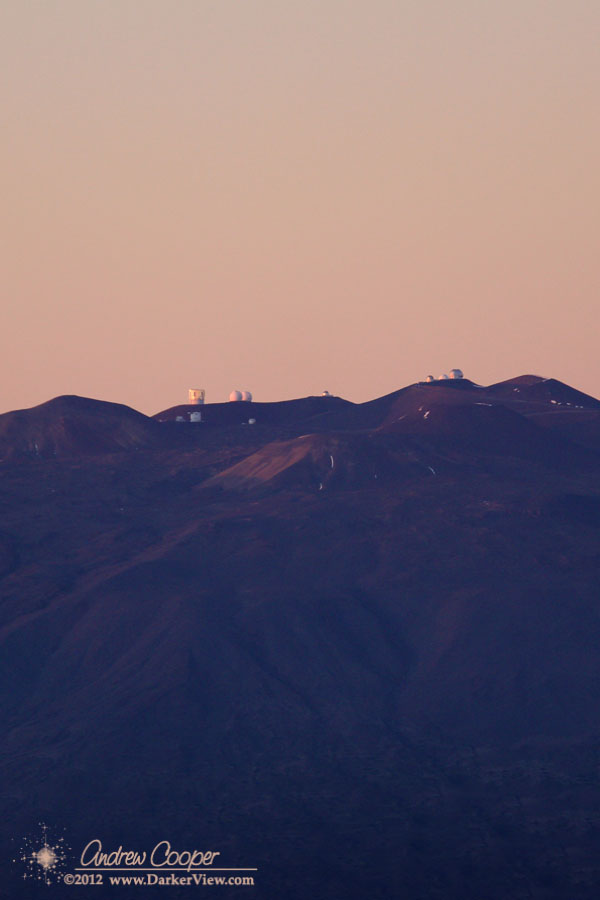
Today the planet Mercury passes through inferior conjunction, passing between the Sun and the Earth. In a week or so the planet will again be visible in the dawn sky, climbing higher each day. Maximum elongation will occur April 18th.
Postcard from the Reef – Gaudy
A Great White at O’oma
Three days after we dove the site, a great white shark attacks a diver at the same site. The man was skin diving and spear fishing at O’oma, what the surfers call Pine Trees. The diver was not injured, the shark attempted to steal his catch and from the story might have escalated the attack if the diver had not gotten out of the water. Sounds like there were some photos taken of the shark from shore, but none seem to have surfaced yet.
Interestingly, the diver described the shark as injured, perhaps a reason the shark was attempting to grab an easy meal on the reef instead of the usual pelagic prey?
Spring Equinox
Spring equinox occurs today at 19:14HST. Today there will be little difference between the length of the night compared to number of daylight hours. This is the first day of spring as marked by many cultures in the northern hemisphere.
Some calendars may mark the first day of spring on the 20th. And it is, for much of the world. For Hawai’i the equinox occurs on the 19th when you consider the time zone difference.
| 2012 Solstices and Equinoxes | ||||
|---|---|---|---|---|
| UT | HST | |||
| Perihelion | Jan 5 | 03:59UT | Jan 4 | 17:59HST |
| Spring Equinox | Mar 20 | 05:14UT | Mar 19 | 19:14HST |
| Summer Solstice | Jun 20 | 23:09UT | Jun 20 | 13:09HST |
| Apehelion | Jul 4 | 23:59UT | Jul 4 | 13:59HST |
| Fall Equinox | Sep 22 | 14:49UT | Sep 22 | 04:49HST |
| Winter Solstice | Dec 21 | 11:12UT | Dec 21 | 01:12HST |
| Source: USNO Data Services Website and the NASA Sky Calendar | ||||
Postcard from the Reef – Nudi Eggs
A little spiral on a rock, an odd looking thing, a bright white against the reds and yellows of the sponges. I spotted the spiral from some distance away across the cave. But I know what to look for, sweeping the rock with my dive light.
The nudibranch themselves are nearby, on the same face of the rock. I find three white-margin nudibranch, two quite large at about 3cm, the largest I have seen this species. A much smaller specimen is close by, less than half the length of the adult. These are a handsome species, always nice to find.

I am surprised that the eggs are not quickly eaten by fish or other predators. There must be some defense mechanism in play, a foul taste, a toxin, nudibranch are known to employ such tactics.

Venus Transit on Mauna Kea
A Venus Transit is a truly rare event. Transits occur in pairs eight years apart, with the next pair not occurring for another 120 years. The first event of the current pair occurred in 2004. Thus the next event will happen in June 2012. Considering the century long period between events, this is the last chance to witness a Venus transit during our lifetimes.
The 2012 event will be visible from the west coast of North America to Japan, China, Australia and Central Asia. For those wanting to observe the entire event from start to finish the choices narrow quite a bit. You have the choice of the Central Pacific, Japan, as well as Eastern China and Eastern Australia. This, of course, includes here in the Hawaiian Islands.
Many sky-watchers from North America will see only one choice if they wish to observe the event… the Big Island. The only place easily accessible by air, featuring excellent visitor accommodation, and an observing site that sits above the clouds that could so easily interfere with carefully laid plans. For the serious observer there is one obvious choice… Mauna Kea.
We saw the first signs of this well over a year ago. The tour companies that specialize in astronomy related travel, the folks that feature solar eclipse tours and similar events, began scouting Mauna Kea as a destination. Then the ads appeared, in Sky & Telescope magazine, Astronomy magazine, etc., “See the transit from Mauna Kea!” We had fair warning that this event was not going to pass peacefully.

Visibility chart for the 2012 Venus transit, image credit: Fred Espenak/NASA
Some folks seem to think the crowd will be huge, a thousand people or more. I am not so certain, this does not have the general appeal of a total solar eclipse. The transit is something that will be of interest to amateur astronomers and some interested segments of the public. I personally expect hundreds of people coming to Mauna Kea to view the transit, not thousands.
However many folks do ascend the mountain for this event, we have begun putting plans in place to handle it. Various groups have met to do a bit of planning. Most significantly, those in charge of managing the mountain, The Office of Mauna Kea Management, are putting a few measures in place. As usual, expect to stop at the Mauna Kea Visitor Information Station on the day of the transit. But this day there will be a few differences…
- All available MKSS staff will be on duty. All of the Mauna Kea rangers and visitor station staff will be helping make sure assistance is available to visitors when traveling to the high altitude environment of the summit.
- Access to the mountain will be controlled for the day, a gate at the VIS allowing access for official vehicles only.
- A free shuttle will run from the VIS to the summit. The Mauna Kea tour companies providing the vehicles and drivers.
- Solar telescopes and video monitors will be set up at the VIS to allow safe viewing. Staff will be available to answer questions and assists with the equipment.
- Several other locations on the island will be setup for viewing the transit with solar telescopes and staff. Expect these to include ‘Imiloa, Keck HQ in Waimea, and some possible other locations.
All of these plans are somewhat preliminary, details may change as the date approaches and final arrangements are made. I will attempt to post what I know here on Darker View.
Myself? I plan to observe the event from the summit. Set up behind Keck with a solar telescope to photograph the transit. We plan to set up a live feed of the transit for use by other sites, and available to viewers across the internet.
Postcard from the Reef – Snapping Shrimp
Put your head below water near any tropical reef and the first thing you hear is the cacophony of snaps. This is the popping or crackling noise of hundreds of snapping shrimp. Rarely seen, these small shrimp are everywhere, I find it amazing that these small shrimp have such an impact on the reef environment.
This pair was deep in a cauliflower coral, not easy to photograph. Even worse, I was snorkeling, not diving, it took three dives, and three attempts to get the photo…

Holoholokai
At the very north end of the Mauna Lani resort complex, just beyond the gates into The Fairmont Orchid is a very nice public access to the coastline. With well maintained facilities, this park attracts local and tourists alike to the water. There are full bathrooms, a fresh water shower, picnic tables and barbecue grills to use amongst a rich lawn and pleasant shade trees. The coast here is a picturesque combination of blue water and black volcanic rock jutting into the sea. The parking is limited to a couple dozen spots just behind the park. The site can be used equally well by divers or experienced snorkelers with a rich coral reef just offshore the beach here.
The entry here is rough cobble and rock, care must be taken to scout a course through the many offshore rocks that complicate swimming to and from the beach. When the seas are calm, there should be little if any trouble getting to and from shore, do not attempt this area if there is any substantial surf to deal with.
View Larger Map
Whitetip Reef Shark (Triaenodon obesus) in a cave at Holoholokai, photo by Deborah Cooper
Reaching the site is fairly easy, following signs to the beach and to the petroglyphs through the Mauna Lani resort. Turn into the Mauna Lani resort from the Queen Ka’ahumanu highway at the obvious grove of tall palms surrounding the entrance. A little over a mile across the lava flows will bring you to a large roundabout (traffic circle in American). Turn on the first exit from the circle, heading north through the condominiums and town homes. A couple miles more will bring you to the entrance to the Fairmont Orchid. Just before the entrance a right turn leads down a paved road to the park.
A Whitetip Reef Shark (Triaenodon obesus) under a ledge at Holoholokai
Once into deep water the snorkeling or diving is as good as anywhere along the Kohala Coast, the same reef divers can enjoy at the Puako sites just north. The depth remains quite shallow until about 50 yards offshore where a series of steps can be found, the first dropping to 15-25ft and another just past this dropping yet further. The vertical walls of these steps are rich in coral and life. The shallow step provides the best place for snorkeling, while divers will quickly head for deeper water. Eels, octopus and other rich marine life are all to be seen here.
There are several very nice caves for divers here. Trending south from the entry area, one will encounter a surge channel in the coral. Two nice caves are found along this small canyon. The better of the two is on the north side where a low entrance at the base of the wall leads to a 40 foot diameter chamber with a large skylight. Sleeping white tip sharks are common in the caves and overhangs here, particularly first thing in the morning.
The parking lot also serves as a trail head for a three-quarter mile walk to the Puako Petroglyphs, a large collection of ancient Hawaiian rock art that is found in photos and guidebooks all across the islands.
Holoholokai makes for a nice beach experience with a pleasant park and good access to the water. Worth considering if looking for a place to get to the water amongst the resorts of the Kohala Coast.