A Darker View

Archive
Random Thoughts

DS1013S Delay Line

A DS1013S delay line IC photographed for an eBay sale

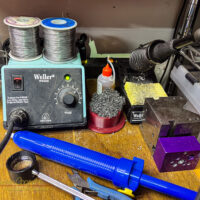
My big project over the last month has been cleaning out the garage. Not the easy part either, but going through the pile of electronics parts I have on hand and organizing. Part of that organization is culling out and reducing the pile, a task that must be done every few years. I have repeatedly filled the trash can beside my workbench. Scrapping or simply throwing out some of the accumulated parts and bits. Some stuff is just obsolete, some is well past any sort of reasonable shelf life, some I just do not need anymore.

There is some stuff that could have some value. Components and gear that could be sold, for that stuff there is eBay. I have eight listings active right now, and a few more I need to set up. Much of the stuff is electronic components, ICs and DC-DC converters. I am making some money from this stuff, not a lot, a few hundred dollars so far, perhaps enough to buy a few new toys.

Basic household tasks require some re-engineering when performed in the presence of a feline. Making the bed, vacuuming, loading the dishwasher, all tasks must take into account the needs of the cat. This includes doing laundry. While the task seems straightforward, it is usually more complicated than a simple evaluation would suggest. For example, with a feline present the actual procedure for changing loads in the clothes dryer runs something like this…

Ras in the Dryer

Rasalhague inspecting the laundry

  1. Check that load is dry
  2. Remove cat from dryer
  3. Remove dry laundry from dryer
  4. Remove cat from dryer
  5. Load wet laundry into the dryer
  6. Remove cat from dryer
  7. Clean lint filter
  8. Remove cat from dryer
  9. Visually insure cat is not in dryer
  10. Close and start clothes dryer
  11. Where is the other cat?

I sometimes chose to skip step #4.

In the photo you might note the large bell on Ras’ collar, this has repeatedly been a useful item, saving both us and Ras from much trouble. It has also taken a couple experiments to locate a suitably Ras resistant bell that he is unable to quickly destroy.

Feline Inspection

“I see your problem right here…” Rasalhague inspecting my work while I installed a new ceiling fan in our bedroom.

A house is empty without some sort of furry residents. Living without cats for much of last year just seemed wrong to me. The house to quiet, without the life that makes it a home.

Our previous cats had moved from the mainland with us. A year ago we lost both in a short span of time. It was not really a surprise, both were older cats and had been with us for many years. But still, loosing such longtime companions was hard. It was a while before we brought new cats into the house, over three months. But eventually a pair of pound kittens from the local humane society were bouncing around our home.
Two active kittens, now young cats are quite the change from two sedentary, elderly cats. Life is quite a bit livelier around the house. We have had to kitty-proof many things that were in no danger before. Anything with a cord has to be put away, certainly not left dangling over the edge of a table or desk. So far I have had to replace two headphone cables and one Apple charging cord. At least I can easily solder a new cord into something.

Any small creature that ventures into the house is in mortal danger. Cockroaches? Large ants? Played with until dead and then eaten. Geckos foolish enough to use the floor? Now tailless. We have not yet encountered a centipede, something I worry about a bit. The monsters we have around here can be six inches long and pack a serious sting.

Having my feet attacked under the bed covers, a streak of grey fur wizzing past as I sit at the kitchen table, being greeted at the door when returning from work, a cat curled up beside me, purring as I read the daily news. these are the things I enjoy, and really do not want to be without.

Another large, arbitrary number… I have rolled the odometer on my 1995 Ford Explorer past 200,000 miles. It occurred when driving back from counting whales along the Akoni Pule highway north of Kawaihae.

Two Hundred Thousand Miles

The odometer of my Ford Explorer at 200,000 miles

When I bought this vehicle it was the first vehicle I had ever purchased new. I took delivery with eleven miles showing on the odometer. It seems so odd to consider 200,000 miles. I try to remember all of the wonderful memories of those two hundred thousand miles… Old mining roads in Arizona, dozens of star parties with the back packed with telescopes and gear, driving past sandstone arches in Utah, snow and ice covered highways, parked underneath a Saguaro cactus having lunch among desert wildflowers, the back heaped with wet scuba gear on a Hawaiian beach, a sunset atop Mauna Kea.

I remember worrying when I bought the vehicle, $23,000 was a lot of money to me back then, would I get to use the vehicle enough to make it worthwhile. Would I end up wrecking the vehicle in the first year? Would it be stolen or experience some horrible break down? Two hundred thousand miles later I can answer that question.

School science fair season is here! As an engineer, it is wonderful to see school kids doing science and engineering tasks. I enjoy going to see what the students have come up with and giving a little of my time to support science and engineering education.

Science Fair

Students from Parker School participate in science fair

In the past two weeks I have served as a judge for two science fairs, Parker School and Kanu o ka ‘Āina. Parker is a private school in Waimea with a well deserved reputation for excellence. Kanu is a charter school with a heavy emphasis on Hawaiian culture. Both schools make a special effort with science fairs, expecting their students to participate and go on to the county and state wide competitions.

As usual, the projects are quite the mix. Some projects are simply the usual stuff, variations on the standard projects one can find posted to the internet, standard fodder for science fairs nationwide. Not that I totally disapprove of these common projects, students can gain valuable experience when performing any good experiment, even one done many times before. It is all in the execution.

One difference you really find here in Hawai’i, is a heavy emphasis on Hawaiian culture and special problems unique to the islands. This leads to unique experiments that address local issues. Propagation of native plants, alternative energy, permaculture, issues that have a direct connection with island life. Some student explore aspects of native Hawaiian technology. I was particularly impressed by experiments in traditional dye mordants examining the effectiveness and permanency of various mordants with tumeric dye and cotton cloth.

The results are likewise quite the mixture. Experiments that result in good success, to others that do not fair so well. Looking at a growth chart with all zeros in the data table I was forced to ask… “did the plants just not grow?” …”They all died.” Still, failures can be just as good learning experiences as success, sometimes better. I am always impressed by a student who admits failure and can explain what went wrong.

Some of the students I graded will go on to the regional competitions, I expect some will do quite well. Good luck!

My mother made jam all the time when I was growing up. She still does, I am just not home to enjoy the product very often. I remember a basement with shelves and shelves of preserves. We enjoyed the bounty of summer all through the grey days of winter.

When I was home recently I was somewhat chastised by seeing jars of homemade strawberry jam. It was delightful on the morning toast. Sitting at the kitchen table, helping my mother to destroy the newspaper crossword.

Faced with a bucketful of guava from my own tree there really was no choice. I set about slicing them up for the pot. I mostly remember how to do this, my mother made sure her sons were educated in the basic household skills, to her mind this included canning. I even have the needed tools and a stash of jars and lids.

The trick with guava is seed removal, this requires a few moments in the blender then straining through a screen colander. I have never done guava before, thus the results are a bit uncertain. I referenced a half dozen recipes across the web and noted the basic proportions they had in common. All the recipes I found require no pectin, thus I added none.

All of the jars sealed successfully, so maybe I do know what I am doing. We shall see…

Making Guava Jam

Making a batch of guava jam on the stovetop

Sunrise over Georgia Strait

Sunrise over Georgia Strait

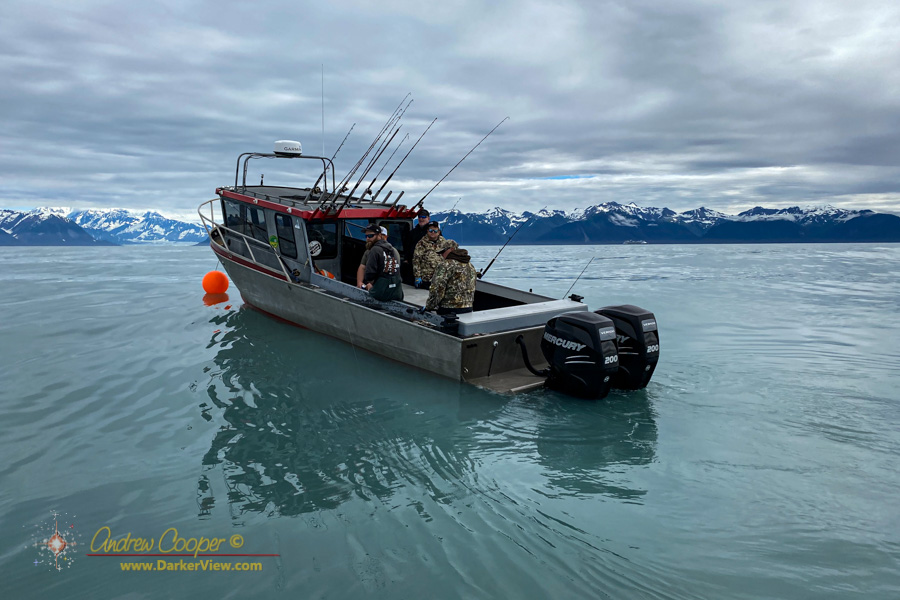
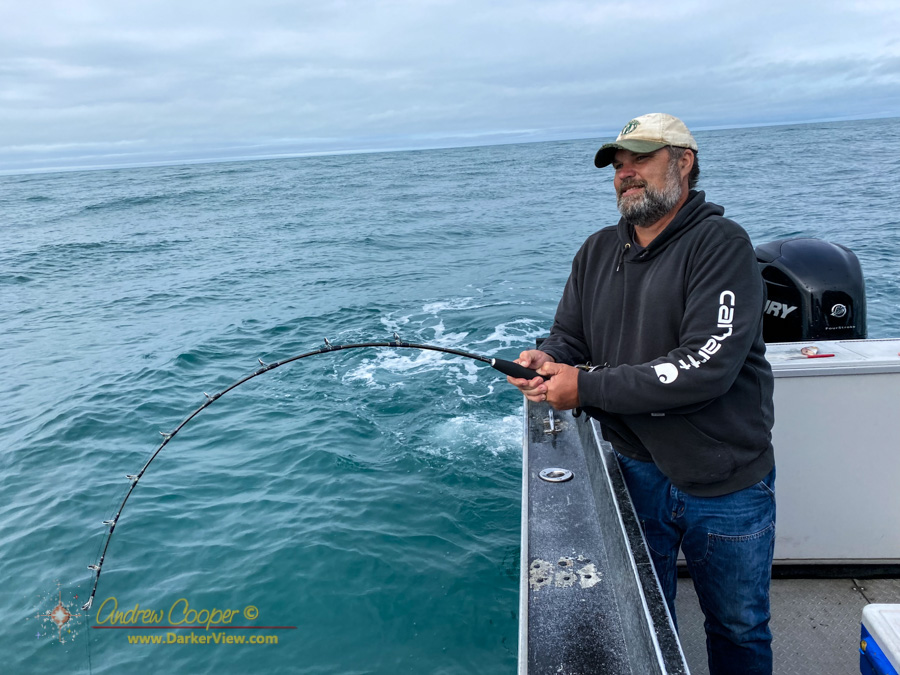
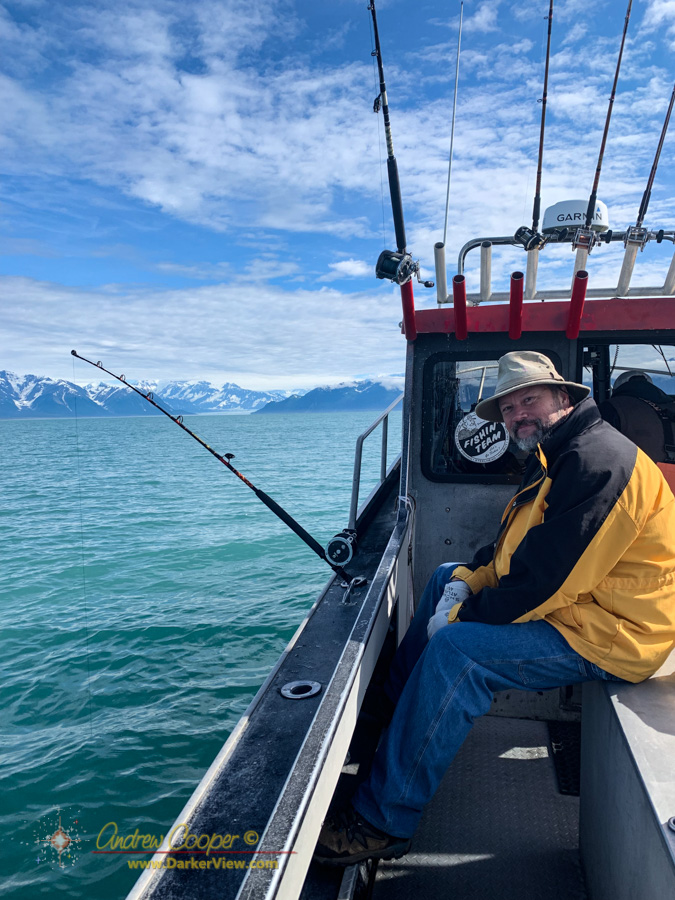
The Nordic Quest is now moored in Anacortes for the winter. We had a great time bringing her down the inside passage. Leaving Juneau on September 1st and arriving Anacortes on September 18th, plenty of time for a little exploring here and there. We got in a little fishing along the way as well, arriving with all the freezers full of salmon, halibut and crab.

You want to hear about the trip? All the fun details? You will have to head over to NordicQuest.com! The hours and days of cruising provide ample opportunity to pull out the iPad and write. There are descriptions of the fishing, the adventures and useful notes on each harbor and anchorage we used for the trip.

I shot 1,843 photographs during the voyage, about 43Gb of photos. This does not count the thousands of timelapse photos and dozens of video clips. The best of these photos are now posted as photos of the week, scheduled from this week through next summer.

In the meantime I have neglected Darker View. Time to return to the islands in both body and imagination. I have more explorations planned for the fall, time to put those plans into motion.

My Mother's Garden

My mother’s garden in Portland

I am always amazed when arriving at the house, as long as it is summer, the garden is spectacular. Roses, fireweed, mums, lilies, rhododendron, and so many flowers I do not know, a riot of color greets the eye. Among the flowers less colorful, but no less beautiful plants, in particular an array of hostas fill every available corner. Then there are those plants chosen not for looks but for the produce, tomatoes, green beans, blueberries, potatoes, and several varieties of herbs. Every meal seems to feature a little something from the yard.

She is not alone… In the old Larelhurst neighborhood of Portland, the bar is set high. Every block hosts one or two gardens that you just have to stop and enjoy. These are streets that just invite slow walks on a warm summer’s eve.

The garden is a delight and at the same time makes me feel inadequate. My own yard comes nowhere close, the few flowers and fruit trees just do not measure up to this impressive product of the gardener’s art. I will just have to go a little further when I get home, perhaps another planting, another stone wall. I have a long ways to go.

My old Ford Explorer has been a surprisingly reliable vehicle, even now with nearly 200,000 miles behind it. True, it is showing its age and there are a few things that do not work. It still gets decent gas mileage, has not soaked up much cash for repairs, and has always gotten me home. The vehicle continues to get me to work and the beach, what else can I ask for?

OK, have to scratch the get me home part.

At least it failed in the parking lot at Keck. Lots of cranking, no ignition, no fuel. And it fails on a Friday afternoon, when I fly to California the next morning. So the vehicle sits at work for a week.

When I do get a chance to work on it, I quickly determine the issue is the fuel pump. There is no gas getting to the engine. No problem, I can fix this one.

Get the vehicle towed home, jack one side up and drop the fuel tank. Of course I had a nearly full tank of gas when the pump failed. Murphy strikes again! It is necessary to get the gas out of the tank before removing it from the vehicle. I had to siphon the fuel out, a slow process to remove twelve gallons. Not having enough gas can capacity I had to dump it somewhere… I wonder if my wife will figure out why she got such excellent mileage out of her last tank.

Pulling the Tank

Pulling the fuel tank from a 1995 Ford Explorer

The tank is actually pretty easy to remove, a handful of lines, one cable and seven bolts need to be removed. The only real problem I had was that the bolts had not been removed since the vehicle was new, 18 years ago.

Every single bolt was a struggle, using my full strength to back the bolts out, 1/6th of a turn at a time. I really need to consider the purchase of an impact wrench. What took two hours to get out took 20 minutes to get back in once all of the bolts were out, cleaned up and hit with a little WD-40.

When I pulled the original pump out of the tank I grabbed a 12V battery pack and tested it. No problem, the pump starts right up? I also check the wiring, some of he connectors are a bit corroded, though not horrible. I clean those up and grease with silicone contact sealer.

Continue reading Pump Trouble…

I normally get on an airplane about once or twice a year. This summer that will be three trips in two months, with just a few weeks in-between. Two of those hops will be back and forth to the mainland, a five hour flight from the islands.

Over the Pacific

34,000ft over the Pacific Ocean

I am on the first leg of the last trip as I write this, the third jump across the pond in as many weeks. The first destination is Seattle and a family reunion to celebrate my parent’s 50th wedding anniversary. Then it is off to Alaska to do some fishing and bring the boat down the coast to the Puget Sound for the winter.

As I look down on the expanse of blue water my mind wanders. Perhaps the upcoming boating expedition has lent a nautical meme to my thoughts… I think of those who sailed into that blue with no idea of what lay ahead. The explorers who set course into the vast Pacific not knowing if they would find a reef the hard way in the night.

I consider the ancient Polynesians who chose a course without a compass or chart, navigating by the stars and waves. Their journeys would last for weeks or months, possibly much longer if the winds did not cooperate. Using hard earned knwolege they would locate the tiny specks of land scattered acrooss this vast expanse of blue.

Here I sit in relative comfort. Perhaps a bit confined, a small seat amoung many others, but I need endure for only a few hours. I sit at the window and watch the small clouds slide by below, trying not to look at the clock. One can look at the map, but somehow fails to convey the reality of that seemingly endless blue outside my window. I imagine a double hulled canoe, with coconut sails, upon those waves 34,000ft below.