Curled into the top of a coral head, dressed in nighttime camouflage colors, pretending to be part of the coral. Sitting still just makes it an easy target for the camera…

When you want to see the stars, find someplace dark

Curled into the top of a coral head, dressed in nighttime camouflage colors, pretending to be part of the coral. Sitting still just makes it an easy target for the camera…

I have occasionally seen these starfish tucked into the coral by day. When you see just a small part of the animal it is not immediately recognizable as a starfish, just a lump of something that does not match. They emerge at night to feed on the coral itself. Once in the open the five-fold symmetry begins to suggest that you might be looking at a starfish…

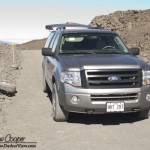
Any day that starts with two flat tires is bound to be an interesting day.
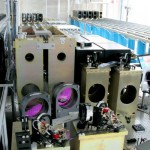
I had planned on working on one of the cameras in Interferometry. The camera has been having trouble automatically filling with liquid nitrogen. In addition I had a list of smaller issues that needed to be dealt with. Unfortunately one of those minor issues turned out to be not so minor.
The entire day was busy from beginning to end. I attempted to finish the last few tasks on my list as the last few minutes of the day sped away. The rest of the guys were ready to leave about a quarter to five, while I was still connecting a few last metrology cables. “Yes, I am coming!” I answered on the radio for the second time. I grabbed my tool bag and headed to the door as the clock hit 17:00.
One of those days I return home exhausted. I will have to head up again, quite soon, to deal with other problems still unfinished. Hopefully a somewhat less complicated day.
Something was wrong… it was not raining.
Four previous times we have attempted to do this, hold a star party for the students of Waikoloa Elementary School. Four times it has been either cloudy, or outright raining. Yes, raining in one of the driest areas of the island, a place that gets, maybe, ten inches of rain each year.
We even had clear skies!
It was a great event, perfect skies, several big telescopes, and hundreds of eager eyes.

They hit us just after 8:00pm, a steady stream of students and parents drawn to see the sky. I would guess that well over two hundred folks came by the star party. The skies in Waikoloa are wonderful for this sort of thing. Nice and dark, with the summer Milky Way glowing brightly overhead. We slewed from globulars to nebulae, to binary stars. Steady lines of folks waiting to look through each telescope. I have never gotten tired of the reaction when someone sees something spectacular through the eyepiece for the first time.
Cliff used his 24″ ‘scope to hunt down the new supernova in M101, visible as a small star like object at the edge of a faint halo. I was wondering which star was actually the supernova. Examining some photos afterwards I realized we were looking at the correct object. It will be interesting to observe this event over the coming week, as a nearby Type 1A supernova it should get quite bright.
My thanks to the guys from WHAC who supported this event. Mr. O, our school contact had everything perfectly arranged, from the flyers, to insuring the lights and sprinklers were off for the night. It was a great event, I expect we will do this again.
An almost empty dive boat with one diver wanting to make the best of his vacation. How to fill the boat? Just ask a couple local divers to round out the group and offer a deal. Why not? So we go diving with a few hours notice.
A splendid Kohala morning! Deep blue water, over 100′ visibility, just a day that you are happy to be out on the water. We depart Kawaihae harbor for Black Point. The new boat Blue Wilderness uses is quite nice. Larger, with much more room, and a very smooth ride as we head north. There are only three divers in a boat that can comfortably handle ten or more.

At the bottom a large green sea turtle fins past, I shoot him against the deep blue water. Swarms of Pyramid Putterflyfish hover above the pinnacles. I get my first good, close up photo of a pyramid. It is generally a very fishy site, with a lot of great photo ops, of which I make good use. Potters angelfish are common, as frustrating as usual as these colorful fish dive into the coral at the merest hint of a diver. There are some nice photos of squirrelfish in the crevices, including the largest species, the Longjaw Squirrelfish.

Unfortunately the arm holding my flash breaks and I spend the second dive holding the flash separately from the camera. My hand still aches while I type this from clutching the two together. But I am determined to keep shooting. While clumsy, it did allow me unlimited flexibility in flash placement when composing a photo. Time to shop for a new tray and arm for the strobe.
Four dives for me in two weekends, not bad, as I really have not gotten enough bottom time this year. The best season for diving in Hawai’i is now, I should make good use of it!
I get email. Unlike some more controversial folks on the web, this does not normally contain hate mail. My messages are usually fun to read. A regular feature of my mail are astronomy newcomers asking the usual questions…
Hi,
I found your site while hunting around Google for an answer to a question. I wonder if you can help.
My telescope was bought during the winter of 2011. I’m new to hunting and finding stars and planets. This morning like many mornings I was out and about around 5:38 am. I live in the northern hemisphere, on a farm. As always I look around for any stars that might still be out before the Sun rises fully. If I look hard enough I can find a few. One always sticks out. It is to the south, high in the sky and very bright. At first I thought it was Saturn, but my star chart tells me Saturn would be closer to SSW at 5:35 in the morning. Being I’m not using a compass, I wonder if indeed I’m not facing true south. I’ve read it could be Sirius, but I don’t believe it is, maybe I’m wrong.
Are you able to give me some idea’s as to what star I’m looking at?
Thanks, and I hope you don’t mind the crazy question.
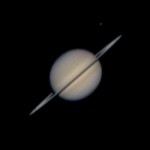
One more question. In the spring when I was looking at Saturn I could have sworn I was able to see the rings of Saturn tilting, or better stated moving up and down for lack of better wording. Am I correct in that? I am using a Celestron AstroMaster 114. Not the best but it was affordable, just in case star gazing was not for me.
Cheers,
[Name withheld]
[Name withheld],
Looking up whenever you walk outside is a good sign that you are indeed a stargazer at heart. I find myself doing the same any time I am under the night sky, even when walking across a supermarket parking lot I look up to see what stars or planets are visible.
Learning the sky simply takes a curious mind and a little experience. The patterns of the sky are regular and predictable. Keep learning and you will be able to recognize any bright star any time you step outside.
A remarkable early morning star could indeed be Sirius this time of year. This is the brightest visual star in the sky and can be quite striking. A quick look at the brightest star in the constellation Canis Major will also reveal the bright constellation Orion just to the north.
Each morning a fixed star like Sirius will rise about four minutes earlier, about one degree higher in the sky each day. The cycle repeats each year with the same stars visible in the same positions in the same season. By fall Canis Major and Orion will be in the evening sky and they will disappear into the Sun’s glare come spring.
Your description of Saturn is interesting… The angle of Saturn’s rings does change, but only over the months and years as the the Earth and Saturn orbit the Sun and the angle from which we view the planet changes.
It may not have been your imagination either. You may have been experiencing what astronomers call poor seeing. This is due to the air above, through which we view the heavens, distorting the light. the effect is the same thing that gives stars a twinkle or can cause the image to shimmer over a hot road. Normally the effect will blur the image slightly, coming and going with moments of clarity. When really bad the image of a star or planet can move about in the eyepiece. I have seen Jupiter look like a bouncing rubber ball under bad seeing conditions.
Keep looking up!
Andrew
Yet another photo of a Whitemouth Moray on a Kohala reef. Well? they are the most common moray to be found at scuba depths. At this point I have an extensive collection of Whitemouth Moray photos. They are common, photogenic, and quite cooperative, they sit still while you take the photo.
I only found three of them in the afternoon and evening of diving…


The plan… Arrive at Mahukona in the mid-afternoon, do an afternoon dive. Then we fire up a barbeque and have dinner, talk story and watch sunset from a beautiful Hawaiian shore. When it gets dark we load up a second tank and head back out for a night dive. Not a bad plan! I have not been night diving in quite a while, so when the plan was suggested I readily agreed.
Our group contained several folks who had never dove Mahukona. Thus the afternoon dive plan was obvious, head for what remains of the SS Kauai, visiting the engine and propeller, exploring scraps of the cargo. From there we headed out onto the coral beyond, exploring the reef due west of the engine to a depth of about fifty feet. It was a nice afternoon dive, nothing particularly exciting found. I noted the behavior change in many fish, seen as the light begins to fade. While not yet dark, it was apparent that the fish were readying for night, hovering close to chosen coral heads, awaiting the coming darkness.
